Inside the World of Avionics: How Advanced Systems Are Revolutionizing Flight

When we think of modern aircraft, our minds often turn to sleek designs, powerful engines, and aerodynamic efficiency. But behind every safe, efficient, and high-performing flight lies a sophisticated brain: the avionics systems. These are the electronic systems that govern everything from navigation to communication to automated flight control—and they are evolving at an unprecedented pace.
At AviatorBlog.info, I’m excited to take you inside the world of avionics, where cutting-edge technology is not only transforming the cockpit but redefining the very nature of aviation.
1. What Are Avionics?
Avionics, short for "aviation electronics," include all the electronic systems onboard an aircraft. This encompasses:
-
Flight control systems
-
Navigation and guidance
-
Communication systems
-
Weather radar and surveillance
-
Monitoring and diagnostics
-
Entertainment and connectivity
In essence, avionics are the digital nervous system of an aircraft—connecting pilots, onboard systems, air traffic controllers, and increasingly, the cloud.
2. The Glass Cockpit Revolution
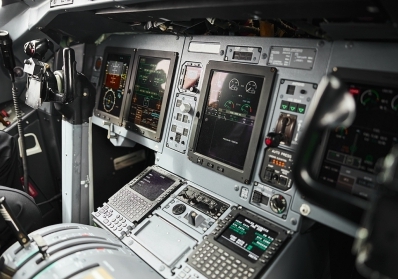
One of the most visible changes in avionics is the shift from traditional analog dials to the glass cockpit—fully digital flight displays that integrate real-time data in a clear, streamlined interface.
These modern cockpits allow pilots to:
-
View multiple data sources on a single screen
-
Switch between flight, navigation, and engine status modes
-
Access synthetic vision systems for better situational awareness
-
Reduce pilot workload through automation and alerts
Manufacturers like Garmin, Honeywell, and Collins Aerospace have led the way in transforming cockpits into highly intuitive digital workspaces.
3. Fly-by-Wire and Autonomous Control
Traditional aircraft rely on mechanical linkages for flight control. Modern aircraft use fly-by-wire (FBW) systems, where pilot inputs are translated into electronic signals that control actuators. This allows for:
-
Faster response times
-
More precise maneuvering
-
Built-in stability augmentation
-
System redundancy for safety
Advancements in artificial intelligence and machine learning are now pushing avionics toward autonomous capabilities—with some aircraft able to auto-land, detect hazards, and adapt flight paths without pilot intervention.
4. Next-Gen Navigation and Satellite Systems
Navigation has come a long way from radio beacons and manual plotting. Today’s aircraft use satellite-based navigation systems like GPS, WAAS, and GNSS to pinpoint position with incredible accuracy.
Emerging technologies such as Performance-Based Navigation (PBN) and Required Navigation Performance (RNP) are enhancing route efficiency and reducing fuel consumption by enabling more direct and optimized flight paths.
These systems are crucial for high-traffic airspace and autonomous flight corridors.
5. Real-Time Data and Connectivity
Modern avionics are increasingly connected—not just within the aircraft but to the outside world. Through real-time data links, aircraft can communicate with ground stations, maintenance hubs, and even other aircraft. Benefits include:
-
Predictive maintenance via health monitoring systems
-
Real-time weather and turbulence updates
-
Dynamic rerouting and air traffic coordination
-
Enhanced passenger connectivity
This digital connectivity makes aircraft smarter and more adaptable in real-time, improving safety and efficiency across the board.
6. Cybersecurity in the Sky
As avionics systems become more interconnected, cybersecurity is becoming a critical concern. Engineers are now designing avionics with secure architectures, encrypted communications, and system isolation to protect against hacking or data breaches.
The future of avionics will balance advanced capability with robust digital protection.
Avionics are no longer just tools—they’re the intelligence behind modern flight. From boosting pilot situational awareness to enabling autonomous operation, these systems are transforming how we navigate, communicate, and interact with the airspace.
As an aeronautical engineer, I’m continually amazed at how rapidly avionics technology is advancing. At AviatorBlog.info, I’ll keep exploring the intersection of aviation and electronics, bringing you the latest insights into the systems that power today’s and tomorrow’s flight experiences.
Latest Articles







Latest Updates in Online Courses and Education.
Aircraft performance is the heartbeat of aviation. It determines how far a plane can fly, how much it can carry,...
Read MoreWhen we talk about advancements in aviation, it's easy to focus on engines, aerodynamics, and fuel efficiency. But for the...
Read MoreIn the high-stakes world of aviation, fuel efficiency is more than just a cost-saving strategy—it’s an environmental imperative and a...
Read MoreArtificial intelligence (AI) and automation are no longer distant technologies reserved for science fiction—they’re actively reshaping the aviation industry from...
Read MoreWhen it comes to aircraft design, every gram counts. The materials used to build airplanes directly impact their performance, efficiency,...
Read MoreEvery aircraft soaring through the skies today began as a sketch—an idea born from imagination, purpose, and engineering precision. But...
Read MoreAs global awareness of climate change continues to grow, the aviation industry finds itself at a critical crossroads. While air...
Read MoreFrom the moment the Wright brothers took flight in 1903, aeronautical engineering has been the driving force behind every leap...
Read MoreExploring the Ancient World: Bible History & Archaeology
Uncover the people, places, and events that shaped biblical and ancient history.
Dive into a rich collection of resources on ancient civilizations, biblical archaeology, and historical contexts. From the empires of Babylon and Assyria to the life of Jesus and the early church, discover maps, timelines, commentaries, and scholarly insights that bring the ancient world to life. Explore the intersection of faith, history, and archaeology with our curated articles, maps, and studies.