Eco-Friendly Aviation: The Role of Sustainable Technologies in Aircraft Design

As global awareness of climate change continues to grow, the aviation industry finds itself at a critical crossroads. While air travel connects the world, it also contributes to carbon emissions, noise pollution, and environmental degradation. Fortunately, aeronautical engineers are rising to the challenge—developing cutting-edge technologies and innovative design strategies to make the skies cleaner and more sustainable.
At AviatorBlog.info, I believe that the future of flight must not only be advanced—it must be eco-conscious. Let’s explore how sustainable technologies are transforming the way we design and build aircraft.
1. Electric and Hybrid-Electric Propulsion
One of the most revolutionary changes in aircraft design is the move toward electric and hybrid-electric propulsion. By replacing or supplementing traditional jet engines with electric motors powered by batteries or hybrid systems, engineers are drastically cutting greenhouse gas emissions.
Startups like Heart Aerospace, and major players like Airbus and Rolls-Royce, are developing regional aircraft powered entirely or partially by electric systems. While full electrification is currently limited to smaller aircraft due to battery constraints, ongoing advancements in energy density are pushing the limits further every year.
2. Hydrogen Power: The Clean Fuel of the Future
Hydrogen is emerging as one of the most promising long-term solutions for sustainable aviation. When used in fuel cells or combusted directly, hydrogen produces only water vapor—making it a zero-emission fuel.
Aircraft like the Airbus ZEROe concept are exploring hydrogen-powered designs, which require entirely new fuel storage, thermal management, and propulsion systems. Though infrastructure challenges remain, the potential environmental payoff is immense.
3. Lightweight and Recyclable Materials
Reducing an aircraft’s weight is a direct way to improve fuel efficiency. Today’s aircraft utilize advanced composites, such as carbon fiber-reinforced polymers and thermoplastics, which are both lighter and stronger than traditional materials.
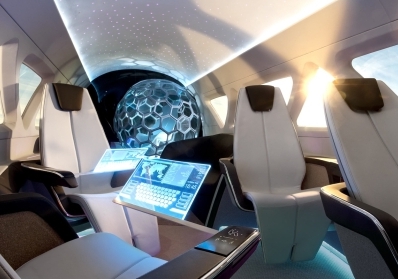
Engineers are also prioritizing recyclability, using bio-based resins and components that can be reused or biodegraded at the end of their service life. Sustainable interior design—using materials like bamboo, organic fabrics, and 3D-printed structures—is another rising trend aimed at reducing waste without sacrificing comfort.
4. Aerodynamic Efficiency and Smart Design
Improved aerodynamics play a major role in sustainability. Sleeker fuselages, high-aspect ratio wings, and blended wing-body configurations reduce drag and improve lift-to-drag ratios, which translate into lower fuel burn.
In addition, active flow control systems and morphing wings—technologies inspired by nature—allow aircraft to adapt in flight for optimal efficiency.
5. Sustainable Operations and Lifecycle Thinking
Eco-friendly aviation isn't just about how planes fly—it's about how they’re built, maintained, and operated. Sustainable design now includes:
-
Digital twins for predictive maintenance, reducing waste and downtime
-
Modular components for easier upgrades and recycling
-
Eco-friendly manufacturing powered by renewable energy and clean supply chains
Lifecycle assessments (LCAs) ensure that every aspect of an aircraft’s impact is measured and minimized—from the first blueprint to final decommissioning.
Sustainable technologies are no longer optional—they’re essential to the future of aviation. As an aeronautical engineer, I’m inspired by how innovation is driving us toward a more responsible and eco-conscious era of flight.
Whether it's through alternative propulsion systems, advanced materials, or smarter design practices, the future of aviation is green—and it's being engineered today.
At AviatorBlog.info, I’ll continue to cover these exciting developments and provide insight into how the aerospace industry is responding to one of its greatest challenges: flying sustainably.
Latest Articles

Latest Updates in Online Courses and Education.
Aircraft performance is the heartbeat of aviation. It determines how far a plane can fly, how much it can carry,...
Read MoreWhen we talk about advancements in aviation, it's easy to focus on engines, aerodynamics, and fuel efficiency. But for the...
Read MoreIn the high-stakes world of aviation, fuel efficiency is more than just a cost-saving strategy—it’s an environmental imperative and a...
Read MoreArtificial intelligence (AI) and automation are no longer distant technologies reserved for science fiction—they’re actively reshaping the aviation industry from...
Read MoreWhen it comes to aircraft design, every gram counts. The materials used to build airplanes directly impact their performance, efficiency,...
Read MoreWhen we think of modern aircraft, our minds often turn to sleek designs, powerful engines, and aerodynamic efficiency. But behind...
Read MoreEvery aircraft soaring through the skies today began as a sketch—an idea born from imagination, purpose, and engineering precision. But...
Read MoreFrom the moment the Wright brothers took flight in 1903, aeronautical engineering has been the driving force behind every leap...
Read MoreExploring the Ancient World: Bible History & Archaeology
Uncover the people, places, and events that shaped biblical and ancient history.
Dive into a rich collection of resources on ancient civilizations, biblical archaeology, and historical contexts. From the empires of Babylon and Assyria to the life of Jesus and the early church, discover maps, timelines, commentaries, and scholarly insights that bring the ancient world to life. Explore the intersection of faith, history, and archaeology with our curated articles, maps, and studies.